
Keynote Speakers of EPEMR 2026
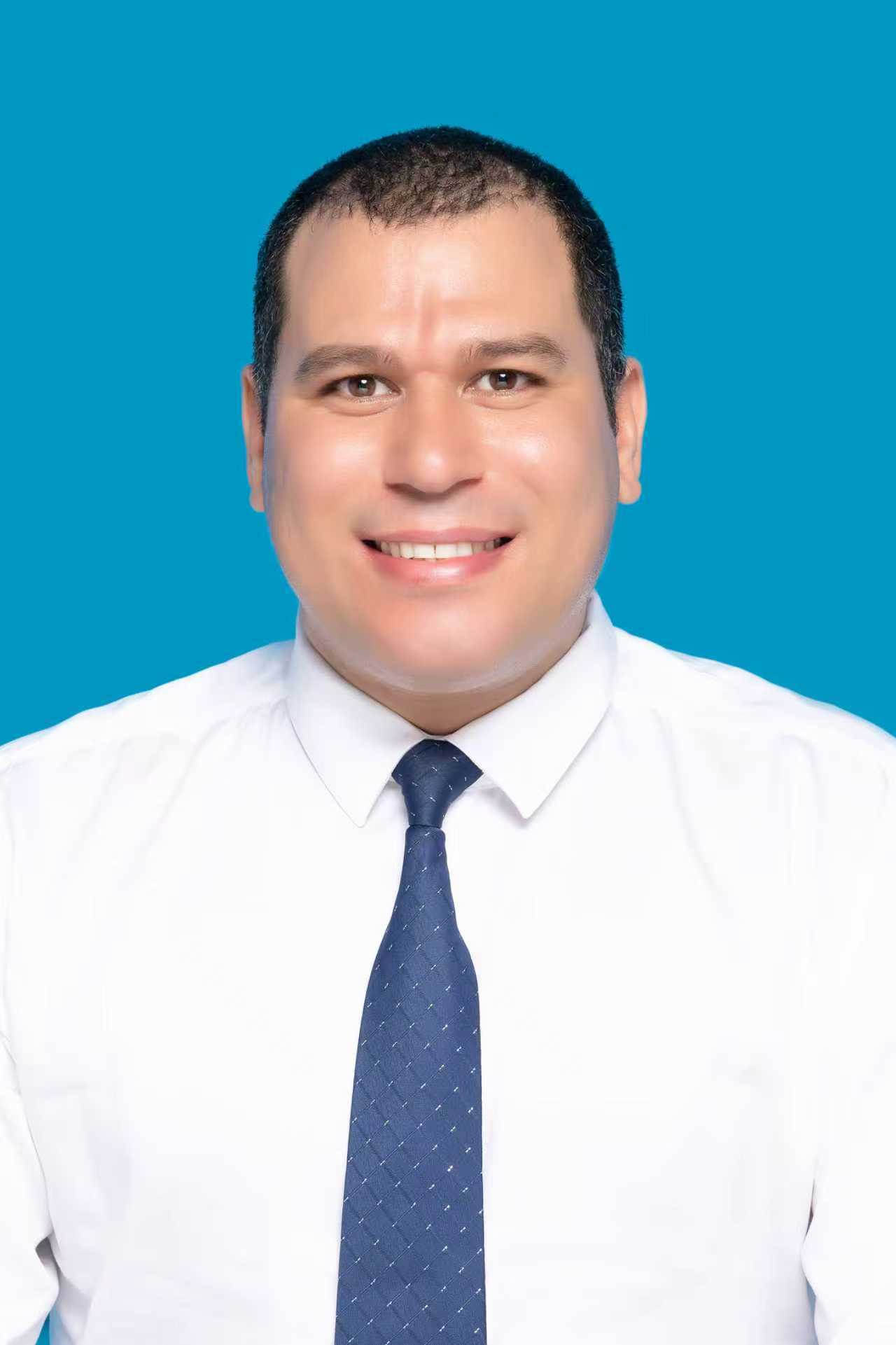
Prof. El-Sayed Salama, School of Public Health, Lanzhou University, China
(Top 2% Scientists Worldwide since 2021, H-index:53)
Biography:
El-Sayed Salama (Top 2% Scientists Worldwide since 2021) is currently a Full Professor at the School of Public Health (PHS) and serves as the Head of the Green Environmental and Energy Laboratory (GEEL) at Lanzhou University (LZU). He was previously engaged as a high-level foreign talent fellow (Category A) at PHS, LZU, from 2018 to 2023. Additionally, he was appointed as a Distinguished Expert of Science and Technology in the Ecological Industry of Gansu Province (China) from 2021 to 2023. He worked as an Assistant Professor and Post-Doctoral Fellow at Hanyang University from 2016to 2018. He was also a Brain Korea (BK21) Fellow during his MSc and PhD studies from 2010 to 2016 at Yonsei and Hanyang Universities (South Korea). He earned his BSc degree in 2008 from the Faculty of Science at Benha University (Egypt).
Prof. Salama and his research team have significantly contributed to the scientific community, with over 150 SCI-indexed publications, 7 patents, 3 books, 4 book chapters, one technology transfer, and 50 invited presentations. He serves as the Principal Investigator on numerous national and international projects. His scholarly work, which has garnered an H-index of 50 and over 7000 citations, has been published in prestigious journals, as first and corresponding author, such as Progress in Energy & Combustion Science (IF=37, Q1), Trends in Plant Science (IF=20.8, Q1), Renewable & Sustainable Energy Reviews (IF=16.3, Q1), Trends in Microbiology (IF=14.9, Q1), Chemical Engineering Journal (IF=13.2, Q1), Resources, Conservation and Recycling (IF=10.9, Q1), Journal of Energy Chemistry (IF=14, Q1), and Water Research (IF=12.4, Q1). He teaches several subjects on Environmental Sciences for undergraduate and graduate students in Various Universities. To date, he has supervised the graduation of 15 students, including 10 PhD candidates and 12 master's students.
Prof. Salama serves as Editor, Associate Editor, and Editorial Board Member for several international journals. He is a member of various Scientific Societies and has roles as General Chair and Session Chair at International Conferences. His research at LZU focuses on “Bioenvironmental Sciences and Bioenergy".
Prof. Byong-Hun Jeon, Hanyang University, South Korea
(H-index= 95, Highly Cited Reseacher)
Biography:
Prof. Byong-Hun Jeon is a Full Professor in the Bioenergy & Environmental Remediation Laboratory (BERL) in the Department of Earth Resources and Environmental Engineering at Hanyang University (HYU), Seoul, South Korea. He received his M.S. and Ph.D. in Environmental Engineering from The Pennsylvania State University, USA. Prof. Jeon is internationally recognized as a Highly Cited Researcher (Clarivate, 2023 & 2024) and consistently listed among the world’s top 2% scientists by Stanford University. His research integrates environmental biotechnology, bioenergy, bioremediation, electrochemical processes, high-throughput omics, and resource recovery, with applications extending to wastewater treatment, biomass engineering, microalgal technology, and sustainable mining. He has published over 610 peer-reviewed articles in leading journals, with an H-index of 95 and more than 33,500 citations, alongside five books/chapters and more than 337 conference proceedings
His contributions include numerous Highly Cited Publications (HCPs) in top-ranked journals such as Renewable and Sustainable Energy Reviews, Water Research, Chemical Engineering Journal, Bioresource Technology, and Coordination Chemistry Reviews. He holds 35 patents, several of which have been successfully transferred to industry, including processes for lithium recovery from batteries, molybdenum separation, microbial electrosynthesis devices, and advanced wastewater treatment technologies
Prof. Jeon has secured and led over 75 funded projects (69 completed, 7 ongoing) from government and industry, with multi-billion KRW support, including flagship projects on sustainable lithium recovery, AI-driven multi-omics for anaerobic digestion, and bio-aviation fuel production
His achievements have been recognized with the Best Hanyang Professor Award, the Minister of Trade, Industry and Energy Award (2022), and multiple Best Researcher Awards from HYU. Beyond research, he has attended and chaired several ACS Meetings & Expositions as Session Convenor and has also served as Chair of the Reviewer Board at the National Research Foundation of Korea (NRF). Since 2018, he has been a member of Korea’s National Examination Board for Professional Engineers in Mining Process. Additionally, he contributes editorially to several peer-reviewed journals, including IJMST and Biotechnology and Applied Biochemistry.
Overall, Prof. Jeon’s career exemplifies a balance of cutting-edge research, impactful patents, global collaborations, and academic leadership, establishing him as a leading figure in environmental engineering and sustainable resource recovery.
Prof. Reda A.I. Abou-Shanab, University of Minnesota, USA
(H-index= 42, Top 2% Scientists Worldwide)
Biography:
Dr. Reda A.I. Abou-Shanab is a professor, consultant, and internationally recognized expert in environmental biotechnology with more than three decades of academic, research, and consulting experience in Egypt, the United States, South Korea, and beyond.
His expertise spans plant-microbe interactions, bioremediation, biofuel production, microalgae, mycorrhizae, biological nitrogen fixation, bio-fermentation technology, and microbiome research. He holds a Ph.D. in Botany–Microbiology from Alexandria University, Egypt (c/o University of Maryland, USA), an M.Sc. in Microbiology from Cairo University (c/o University of Minnesota, USA), and a B.Sc. in Biology from Benha University, Egypt.
Over his career, Dr. Abou-Shanab has held key appointments, including Research Professor at the Genetic Engineering and Biotechnology Research Institute (GEBRI), SRTA-City, Egypt; researcher, class instructor, and teaching specialist at the University of Minnesota; postdoctoral fellow at the University of Georgia, University of Maryland, and Yonsei University, S. Korea; Vice Dean of GEBRI; and Visiting Research Professor at the USDA, Maryland. He also directed the Quality Control Unit of SRTA-City’s Central Laboratory for Scientific Services & Environmental Assessment, overseeing applied environmental monitoring programs.
He has authored over 100 peer-reviewed articles and book chapters, secured eight patents, and delivered invited presentations at numerous national and international conferences. His leadership spans roles as Principal Investigator and Co-PI on both national and international projects, organizing workshops and training programs, and facilitating the translation of technologies into practical applications. As an editor, associate editor, and editorial board member of international journals, and as a reviewer for journals and funding agencies, he actively advances scientific knowledge. He is also a member of several professional organizations.
Dedicated to education and mentorship, Dr. Abou-Shanab has taught undergraduate and graduate courses and has supervised over 20 master’s and Ph.D. students from multiple universities. His exceptional contributions have been recognized with numerous national and international honors from Egypt, Jordan, South Korea, and the USA.
Today, as a research professor and independent consultant, Dr. Abou-Shanab continues to develop innovative strategies that bridge science, industry, and policy, advancing sustainable agriculture, renewable energy, and environmental protection for a cleaner and more resilient future.

Assoc. Prof. Sedky H. A. Hassan, Sultan Qaboos University, Oman
(H-index= 36, 2% Top Scientists Worldwide)
Dr. Sedky H. A. Hassan was born in 1981 in Assiut, Egypt. He obtained his B.Sc. in Microbiology from the Faculty of Science, Assiut University, Egypt, in 2002, and later received his M.Sc. from the same university. He completed his Ph.D. in Biosensors and Bioenergy at Kangwon National University, South Korea. Following his doctoral studies, he worked as a postdoctoral research associate in the Department of Biological Environment at Kangwon National University from March 2012 to September 2012. Dr. Hassan is currently an Associate Professor in the Department of Biology, College of Science, Sultan Qaboos University (SQU), Oman. He also served as a Professor of Microbiology at the Faculty of Science, New Valley University, Egypt. Throughout his academic career, Dr. Hassan has received several national and international awards in recognition of his scientific contributions. These include the Federation of the Arab Scientific Research Councils Prize (2021), the Academy of Scientific Research and Technology Award in Environmental Sciences, Egypt (2020), and the New Valley University Encouragement Award (2019). In the same year, he received the TWAS Young Arab Scientist Prize (2019) for Scientific and Technological Achievement in Agricultural and Environmental Sciences, along with the Medal of Excellence from the Arab Republic of Egypt. Earlier, he was awarded the State Encouragement Prize of Egypt in Biological Sciences (2017) and the Scientific Publication Award from Misr El-Kheir Foundation, Egypt (2013). He also received recognition for his outstanding academic publication record during his Ph.D. studies at Kangwon National University (2012). Dr. Hassan holds three international patents granted in China, Japan, and the European Union related to biosensors and toxicity assessment technologies. His research focuses on bioenergy, microbial fuel cells, biosensors, bioremediation, bionanotechnology, and biofertilizers. He has authored more than 100 scientific publications and five book chapters. According to Scopus, his h-index is 33 with over 3,354 citations, while Google Scholar reports an h-index of 36 with more than 4,513 citations.

Assoc. Prof. Xiaodan Huang, Lanzhou University, China
(H-index= 19)
Dr. Xiaodan Huang is an Associate Professor and Doctoral Supervisor at the School of Public Health, Lanzhou University. Her research focuses on the health of populations in high-altitude environments, with particular emphasis on the mechanisms of gut microbiota dysbiosis under extreme ecological conditions and corresponding nutritional intervention strategies. She has made significant progress in addressing high altitude related health issues, including lipid metabolism disorders, hyperuricemia, accelerated aging, and intestinal barrier injury.
She has led multiple research projects, including sub-projects of the National Key R&D Program and key projects of the Tibet Autonomous Region. Dr. Huang established the "Qinghai-Xizang Plateau Probiotic Resource Bank" in China, housing over 3,000 strains. She systematically screened and characterized several plateau-adapted functional strains with independent intellectual property rights, including Lacticaseibacillus paracasei TDM-2, Enterococcus hirae QT4713, Lactiplantibacillus plantarum AL4510, and Limosilactobacillus reuteri DX4300. Concurrently, she has explored the prebiotic properties of plateau-specific plants, including Lycium ruthenicum polyphenols and Brassica rapa L. polysaccharides, and developed synbiotic products targeting high-altitude intestinal injury and related metabolic disorders, some of which have achieved industrial application.
In the past five years, she has published over 30 SCI indexed papers and been granted 7 national/international invention patents. Her work aims to integrate plateau microbial resource development with population health promotion, providing scientific evidence and technological solutions to improve the quality of life for residents in high-altitude environments.